

FWF project SharedSpace
Exploring Long-Term Human-Robot Interaction: What makes people accept or reject companion robots?
- 3-years project, starts in 2018
- single person project (Elise Richter programme).
- Principal investigator; 250.000 €
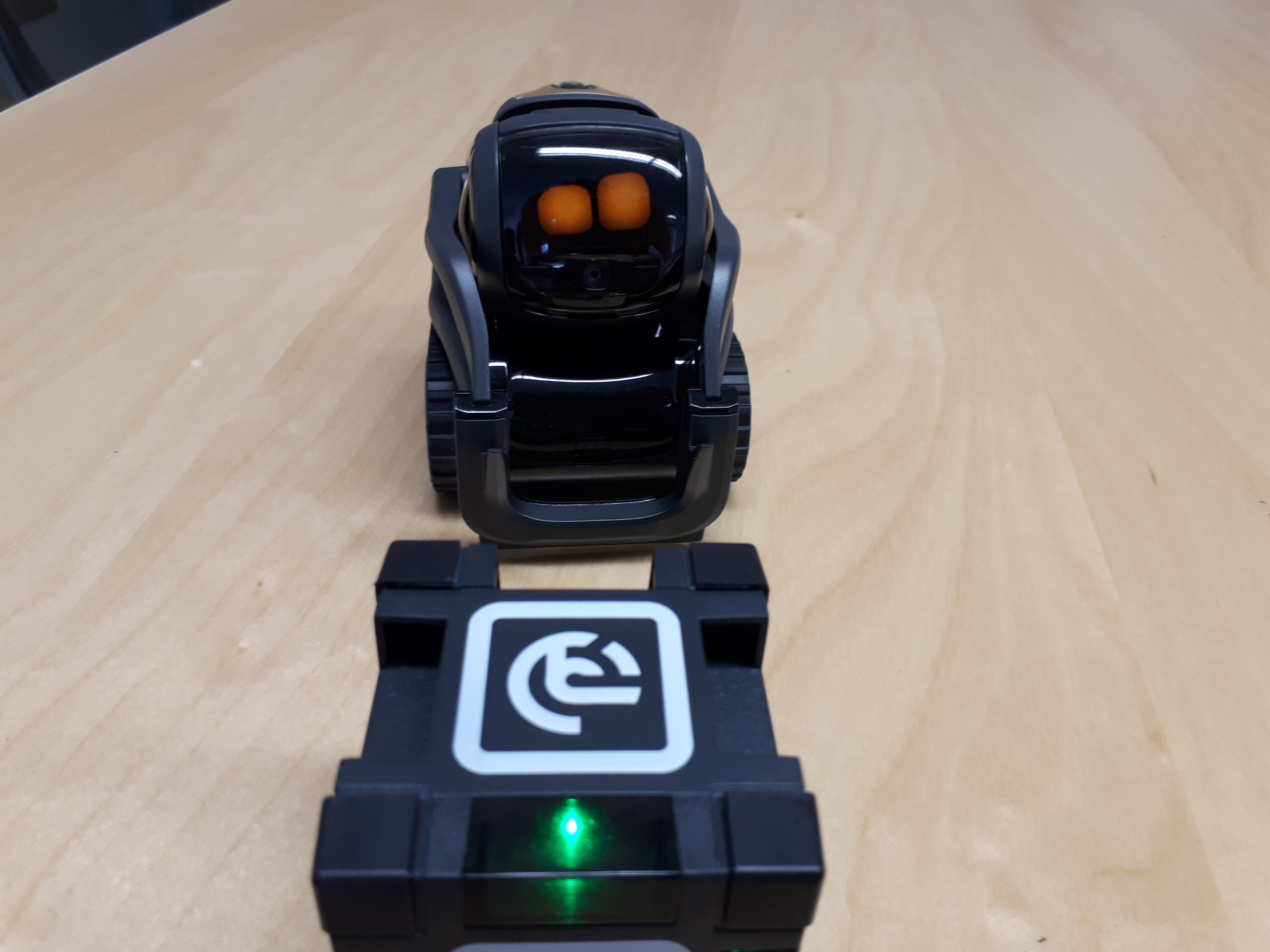
The working hypothesis of this project is that the interaction of ordinary users with a social companion robot (in this project the commercially available robot Anki Vector) changes over time and that its adoption and acceptance differ in terms of the socio-demographic qualities of the involved households.
The main goal is to gain detailed empirical evidence on the adoption and acceptance processes from a relatively small sample (eight households) over a longer period of time (eight months), therefore an ethnographic approach is chosen as methodology. Several household visits accompanied by specific field tools and techniques (semi-structured qualitative interviews, Day Reconstruction Method, drawing/tinkering activities, short questionnaires/rating scales) will be performed. A baseline of existing household routines will be established in a pre-visit before households receive an Anki Vector and are firstly regularly visited over a period of six months. After half a year, the absence of Anki Vector and its impact on the social household dynamics will be studied by giving it back for one month, after a one-month break.